

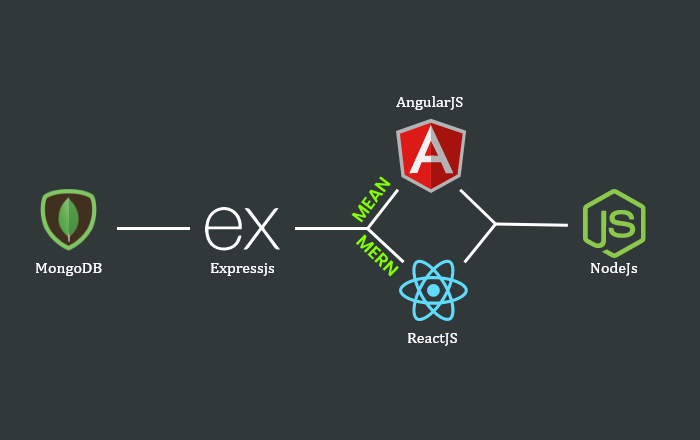
Web development has evolved significantly over the years, offering developers a wide array of tools and technologies. Two popular choices for building modern web applications are the MEAN and MERN stacks. In this blog, we’ll explore the differences between the MEAN stack (MongoDB, Express.js, Angular, and Node.js) and the MERN stack (MongoDB, Express.js, React, and Node.js). We’ll also discuss how your choice can impact your career in web development.
Key Differences between MEAN and MERN
1. Front-End Framework
MEAN: Utilizes Angular for front-end development.
MERN: Employs React for building dynamic and responsive user interfaces.
2. Development Speed
MEAN: Angular has a steeper learning curve, potentially slowing down initial development.
MERN: React is known for its rapid development capabilities, promoting quicker project kick-offs.
3. Community and Ecosystem
MEAN: Angular has a dedicated community and a wide range of third-party packages.
MERN: React boasts one of the largest and most active developer communities with extensive resources and components.
4. Job Mark
MEAN: MEAN stack developers may find opportunities in companies seeking expertise in Angular.
MERN: MERN stack developers often encounter high demand due to React’s widespread popularity.
Considerations for Your Web Development Career
MEAN Stack
MEAN is a good choice if you prefer a comprehensive solution with all its components in one package.
It might be more suitable for established enterprises that value a structured approach.
MERN Stack
MERN is ideal if you’re looking for a more versatile and faster development experience.
React’s popularity opens doors to a broader range of job opportunities, including startups and large corporations.
In Either Case
Invest time in learning JavaScript, as it’s fundamental to both stacks.
Stay up-to-date with industry trends, as the technology landscape continually evolves.
The Future of Your Web Development Career
The choice between MEAN and MERN should align with your career goals and the types of projects you want to work on. Both stacks offer excellent opportunities, but your preferred front-end framework may be the deciding factor.
As you advance in your web development career, consider expanding your knowledge by exploring both stacks. Being proficient in multiple technologies will make you a versatile developer, capable of taking on a broader range of projects.
In conclusion, your choice between the MEAN and MERN stacks can significantly influence your career in web development. Each stack has its strengths and is well-suited to different contexts. Make your decision based on your career aspirations, project requirements, and the types of companies you aim to work for. And remember, in the ever-changing world of web development, continuous learning and adaptability are your greatest assets.

Building Your Vision Into Reality
Estimate ProjectOr call us now 91 98790 98469


